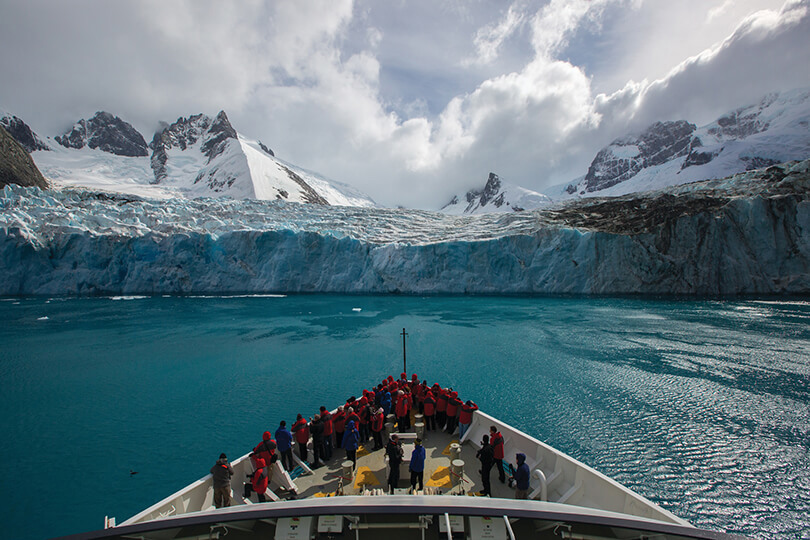
Combine the historic wildlife-rich Falklands and South Georgia with the icebergs of the Antarctic Peninsula on this expansive cruise aboard the luxurious Silver Cloud. Departs…
Falklands, South Georgia & Antarctica
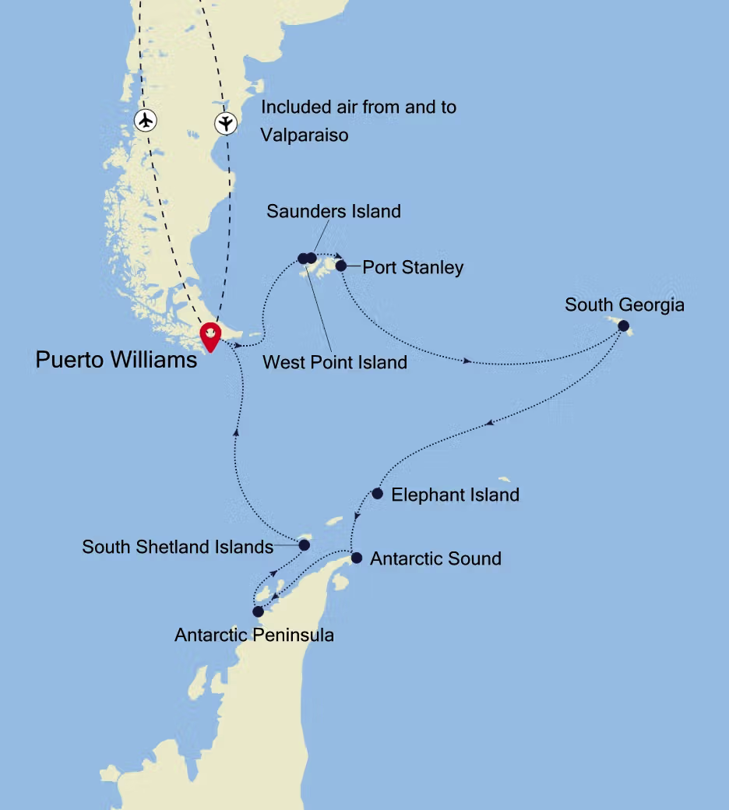
Day 1 - Embark Silver Cloud in Puerto Williams
Arrive in Puerto Williams and embark the Silver Cloud.
Day 2 - At sea
While we're at sea, enjoy wine tastings, designer boutiques, language and dance classes. Take in a matinee movie, check the market or your e-mail in the Internet Point, slip away with a novel from the library to a sunny chaise or with a movie to your suite. Or just take in the sun pool side. The choice is yours.
Day 3 - West Point Island and Saunders Island, Falklands
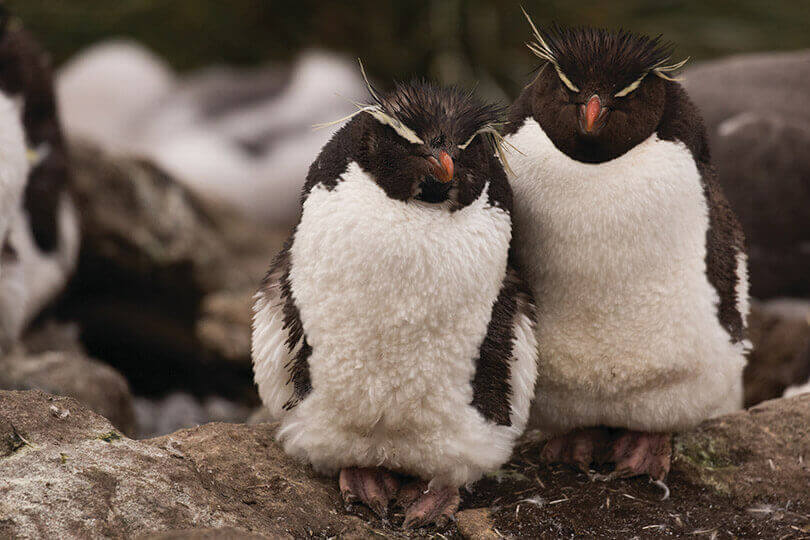
A north-westerly outpost of the scenic Falkland Islands, you'll be welcomed ashore by the calls and cries of a huge colony of black-browed albatross. Indeed, the island was originally known as Albatross Island before being renamed to reflect its geographic location. While the albatrosses - that flash white feathers in the rugged cliffs above the waves - are the most well known residents, they are far from the only animal inhabitants of this remote, isolated land. A huge army of birdlife calls the island sanctuary home, overwhelming the tiny human population and sheep that roam West Point Island's grasses. Meet the rockhopper penguins who scamper and burrow along the coast's boulders, as well as the imperial cormorants who rest here in great numbers. You're also liekly to encounter Magellanic penguins during your explorations. Hike the island's quiet landscapes, and look out for endemic plants like Felton's flower carpeting the green interior. Decorated with some of the archipelago's most dramatic scenery, explore this wind-lashed, distant land of soaring cliffs and towering coastal precipices. Cliff Mountain is the island's standout - a towering sandstone monolith, and the archipelago's highest cliff, falling away to swirling waves below. Look out to the waters to spot Commerson's dolphin chasing each other around the island's wave-washed footprint. Whales also visit, as well as the fur seals who you may spot lounging around West Point Island's inviting shores.
Day 4 - Stanley, Falklands
Tiny Stanley, capital of the Falklands, seems in many ways like a British village fallen out of the sky. Many homes are painted in bright colours, adding visual appeal to this distant outpost. Not far offshore, the wreck of the Lady Elizabeth, is one of the many vessels remaining as a silent testimonial to the region's frequent harsh weather conditions. The islands, also known by their Spanish name of Islas Malvinas, are home to arguably more tuxedo-clad inhabitants of the penguin variety than human residents.
Days 5 & 6 - At sea
Days at sea are the perfect opportunity to relax, unwind and catch up with what you’ve been meaning to do. So whether that is going to the gym, visiting the spa, whale watching, catching up on your reading or simply topping up your tan, these blue sea days are the perfect balance to busy days spent exploring shore side.
Days 7 to 9 - South Georgia & South Sandwich Islands
Charcoal-black mountains ladled with snow, giant glaciers and thriving wildlife combine to make South Georgia one of the great natural islands. Adventure to these far flung lands - where the animals are in charge and humans come a distant second. Here you'll witness a cacophony of calling birds, natural set pieces like elephant seals clashing and thrashing, and crowds of colourful king penguins stretching out as far as the eye can see. An overseas territory of the UK, these isolated, subantarctic islands once formed a remote whaling centre - and you can still visit the former whaling stations. Nowadays the giants of the sea are free to cruise the icy waters uninhibited. Written into explorer history due to its links with Ernest Shackleton’s tale of Antarctic exploration, shipwreck and survival, the Endurance’s crew were saved when he reached the salvation of these shores in 1916 - before returning to collect the remaining sailors from Elephant Island. A museum commemorates the legendary mission, and you can see the memorial to Shackleton that stands over his final resting place on this fabled island. South Georgia’s colonies of king penguins - with vivid bursts of yellow and orange around their necks - stand, squabble and curiously investigate, enjoying the isolated respite of this island. They’re joined by smaller penguin species like Macaroni penguins, and other glorious birdlife like the majestic wandering albatrosses, which you can see gliding on gusts of wind, over the choppy waves.
Days 10 & 11 - At sea
Day 12 - Elephant Island
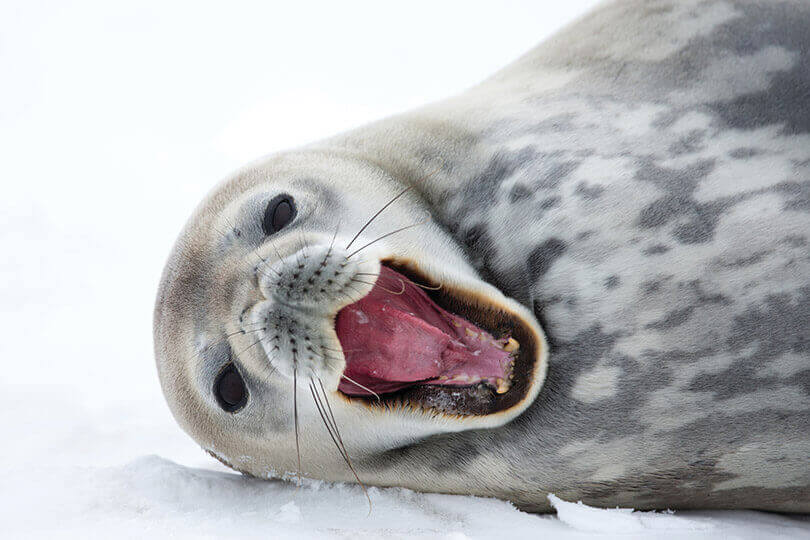
Awesome glaciers flecked with pink algae can be seen approaching Elephant Island — so named either for its elephant-like appearance or for sightings of elephant seals here. Elephant Island is home to several Chinstrap Penguin rookeries, as well as 2,000-year-old moss colonies. Weddell seals and Macaroni Penguins can also be spotted. In 1916, when Ernest Shackleton’s ship Endurance was crushed in pack ice in the Weddell Sea, the crew was stranded here for more than 4 months finding shelter under two upturned lifeboats on the spit of land Shackleton’s men named ‘Point Wild’.
Day 13 - Antarctic Sound
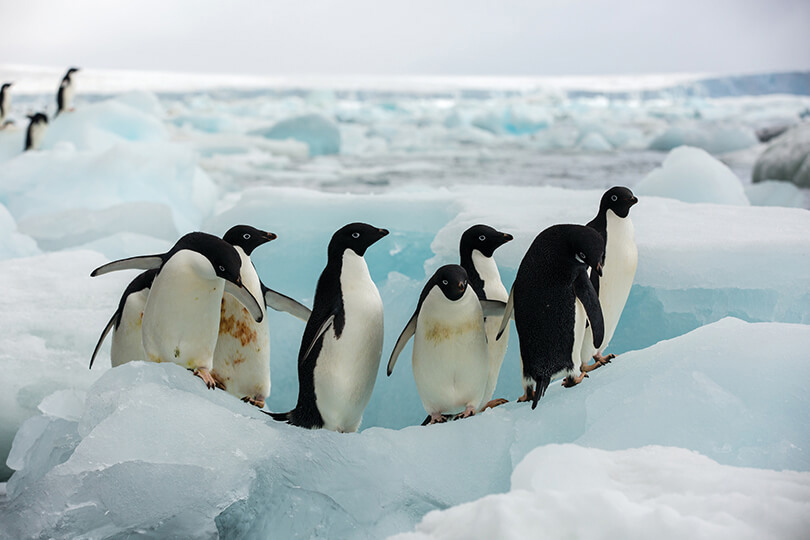
The Antarctic Sound is a stretch of water named after the first ship to have passed through this body of water from the Bransfield Strait to the Weddell Sea in 1902. The Antarctic eventually sank and crew and scientists had to spend quite some time in this area before they could be rescued. Sites that have to do with this story - like Hope Bay or Paulet Island - are sometimes visited. At Paulet, Hope Bay and Brown Bluff Adelie and Gentoo Penguins breed, as do Kelp Gulls and Cape Petrels, Snow Petrels and Skuas.
Days 14-15 - Antarctic Peninsula
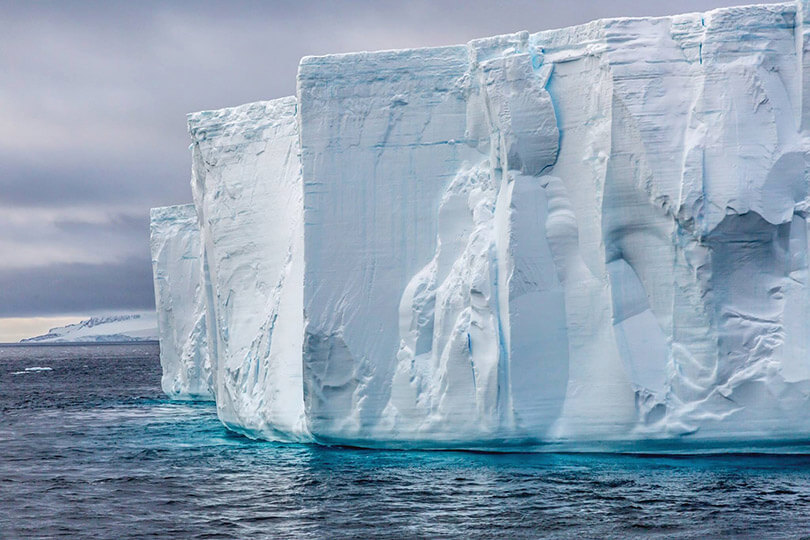
Remote and otherworldly, Antarctica is irresistible for its spectacular iceberg sculptures and calving glaciers, and for the possibility of up-close encounters with marine mammals and the iconic penguins. The Antarctic Peninsula – the main peninsula closest to South America – has a human history of almost 200 years, with explorers, sealers, whalers, and scientists who have come to work, and eventually intrepid visitors coming to enjoy this pristine and remote wilderness.
Day 16 - South Shetland Islands
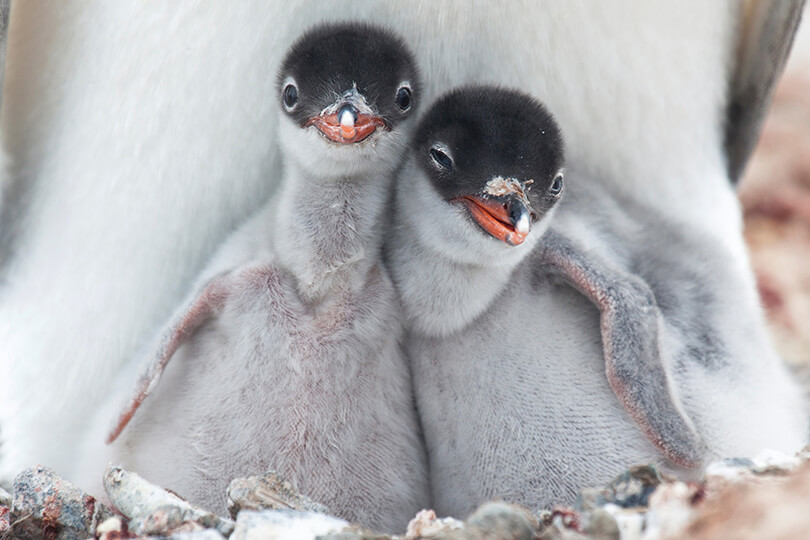
Some 770 kilometers (478 miles) south of Cape Horn, the South Shetland Islands are usually the first land seen in Antarctica. Separated from the Antarctic Peninsula by the Bransfield Strait, nine major islands make up the group. The region was the first to be exploited by sealers in the early 19th century, and because of its proximity to South America, it still is the most visited by scientists and tourists. Chinstrap, Adelie, Gentoo and Macaroni Penguins all breed here.
Day 17 - Drake Passage
The Drake Passage has a notorious reputation for its turbulent seas due to the westerly winds and the funneling effect of the passage. The Antarctic Convergence, a natural boundary where cold polar water flows northward and warmer equatorial water moves southward, is within the Drake Passage. When these two currents meet, nutrients are pushed to the surface, often attracting a multitude of seabirds and whales. Black-browed Albatross, Sooty Shearwaters and White-chinned Petrels glide in the air currents alongside and in the wake of the ship.
Day 18 - Puerto Williams
Sail towards Puerto Williams enjoying a farewell dinner on board.
Day 19 - Disembark