
Immerse yourself in India and discover the people, their beliefs, and their tough yet contented way of life. Everyone is so hospitable and friendly. Admire stunning landscapes, enjoy delicious cuisine, see endemic wildlife, mighty rivers, temples, and explore the rich cultural heritage and architecture.
The world's largest democracy is an intoxicating place to visit: crowded cities with countless shopkeepers, from modern metropolises to the peaceful backwaters of Kerala; holy temples and shrines to the cooling colonial hill stations - there is much to explore. Discover a unique culture, from the great Himalayas mountain range to deserts and lush forests. The sacred river Ganges carves through history and the mighty Brahmaputra river offers 'off the beaten track' exploration including the one-horned Rhinos of Kaziranga National Park. Speaking of National Parks, a safari in Ranthambore National Park is on many people's wish list in search of the elusive tigers. And of course, for the first time visitor, the Taj Mahal remains one of the world's most beautiful buildings; a place of romance built by the Mogul Emperor Shah Jahan to house the tomb of his wife.
India has a rich history, from the days of the great Mogul Emperors and Maharajas with their grand palaces, many of which are now luxury hotels for you to enjoy. In 1498, the Portuguese became the first European colonialists and you can still see their influence today in Goa, Kochin and Diu. The Portuguese had limited resources to control the whole Indian Ocean and gradually the British East India Company took over. It was founded in 1600 to trade but took control of Indian land from around 1612 onwards. The Portuguese gifted The Seven Islands of Bombay to the British as part of the dowry of Princess Catarina de Braganca in her marriage to King Charles II in 1662. The British legacy remains today with the rules of law, a democratic, allbeit very bureaucratic government, love of tea and cricket, and the operation of an effective countrywide railway network.
Good Reasons to Travel to India with Veloso Tours:
- Private Individual Tours - we offer tailor-made packages for discerning travellers seeking authentic experiences in India.
- Expert Advice – Our specialist UK team craft tailor-made itineraries using their first-hand knowledge of India. You’ll benefit from honest recommendations, including pros and cons, sight suggestions, and carefully selected accommodation.
- Personalised Experiences – We design your holiday around your interests through a detailed client questionnaire, ensuring excursions and activities reflect what matters most to you.
- Local Guides – Face-to-face experts who bring destinations to life with their deep knowledge and enthusiasm. They communicate in a way that keeps you engaged and informed.
- Hand-picked Hotels – From converted forts to luxury lodges, private houses, and expedition cruises on the Ganges, Brahmaputra, and Kerala Backwaters, we select the best places to stay based on your preferences.
- Value for Money - You will find our prices competitive for our high quality service.
- Partnerships – Strong local ties with hotels, lodges, agents, and airlines ensure seamless service. Our dedicated Indian representatives are committed to fulfilling your requests with care and expertise.
- 24/7 Support – A dedicated Duty Manager is always on call for your peace of mind.
View our Webinars with Hotels, Lodges & Live reports from our Guides in India
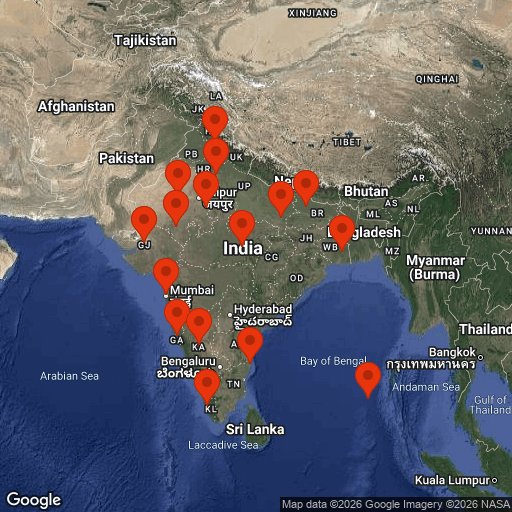
Tour Suggestions

india
Hathi Tour
15 Nights from £4,921
Delhi - Agra - Ranthambore National Park - Shahpura - Sardargarh Fort - Jaipur - Dera Amer - Anopura - Delhi

india
Meenakshi Tour
20 Nights from £3,437
Chennai - Madurai - Periyar - Munnar - Kerala Backwaters Cruise for 2 nights - North Kerala Beach Resort - Kochi

india
Ganges Tour
20 Nights from £6,492
Delhi - Agra - Gadoli - Ranthambore National Park - Jaipur - Varanasi - Ganges River Cruise for 7 nghts - Kolkata

india
Zamorin Tour
14 Nights from £3,365
Mumbai - Madurai (for Meenakshi Temple) - Periyar - Munnar - Kerela Backwaters cruise for 2 nights - Marari Beach - Kochi

india
Tirtha
13 Nights from £5,013
Delhi - Agra - Lucknow - Prayagraj for Kumbh Mela Festival - Varanasi

india
Ghats Tour
11 Nights from £5,510
Kolkata - 7-night Lower Ganges River cruise to Farakka - Varanasi

india
Gandhi's Gujarat Tour
13 Nights from £3,642
Mumbai - Sasan Gir National Park - Junagadh - Gondal - Bhul - Bajana - Ahmedabad

india
Maharaja Tour
15 Nights from £3,295
Delhi - Agra - Ranthambore - Jaipur - Udaipur - Jodhpur - Jamba
Top Attractions in India


Places to Visit


Things to Do


Where to stay


Frequently Asked Questions
Every journey is unique, and questions are part of the process. This FAQ covers the most common topics to help you prepare, while our advisers are always on hand for more personal guidance.
Best Time to Visit India
When is the best time to visit India?
India's climate varies greatly by region, from the Himalayan north to the tropical south. In general, the most comfortable time to visit much of the country is during the cooler, drier months from October to March. However, the ideal timing depends on which regions you plan to explore.
October to March - Cool Season and Best Overall Conditions
This is widely considered the best time to visit India, particularly for exploring the Golden Triangle (Delhi, Agra, and Jaipur), Rajasthan, and central India. Temperatures are generally pleasant, ranging from 15-28°C in northern regions, with clear skies and lower humidity. It is also an excellent time for wildlife safaris in national parks such as Ranthambore and Bandhavgarh, when animals are more active in cooler weather. Southern India, including Kerala and Tamil Nadu, is also comfortable during this period, making it ideal for cultural tours and backwater cruises. December and January can be cooler in Delhi and northern India, particularly in the evenings.
April to June - Hot Season
Temperature rise significantly across much of India, particularly in northern and central regions where daytime highs can exceed 35-40°C. While sightseeing can be more challenging in the heat, this is a good time to visit the Himalayan hill stations such as Shimla, Darjeeling, or Ladakh, where temperatures are cooler and conditions are clearer for mountain views. Wildlife viewing can also be rewarding before the moonsoon season, as animals gather around remaining water sources.
July to September - Monsoon Season
The monsoon brings heavier rainfall across most of India, particularly in western and southern regions. While travel is still possible, frequent showers and humidity can affect sightseeing plans. However, the countryside becomes lush and green, and destinations such as Kerala are particularly scenic during this period. Travel costs may also be lower, and visitor numbers are generally reduced. Some high-altitude regions, such as Ladakh, remain accessible during summer monhts as they lie in raw-shadow area.
India Travel FAQS
Do I need a visa to visit India?
British passport holders require a visa to enter India for tourism purposes. Most travellers apply for an e-Tourist Visa (e-Visa) online before departure. Passports must be valid for at least six months beyond your date of arrival and have at least two blank pages. We recommend applying well in advance of travel and checking the latest requirements before departure.
How long is the flight from the UK to India?
Direct flights from London to major cities such as Delhi or Mumbai take aproximately 8-9 hours.
How many days should I spend in India?
Allow at least 10-14 days to explore highlights such as Delhi, Agra, and Rajasthan. With two ti three weeks, you can include Kerala, Varanasi, or a wildlife safari in Ranthambore or Bandhavgarh National Park.
Is India Safe to travel to?
India is generally safe for travellers, particularly when travelling on a well-planned itinerary with trusted local guides and drivers. As in any large destinations, sensible precautions should be taken in busy urban areas.
Do I need vaccinations for India?
There are no mandatory vaccinations required for entry for most travellers, but routine travel vaccinations such as hepatitis A, typhoid, tetanus, and hepatitis B are commonly recommended.
India Travel Essentials
Language and Culture
India has 22 officially recongnised languages, with Hindi and English widely used in government and business. English is commonly spoken in hotels and tourist areas. India's culture is rich adn diverse, shaped by thousands of years of history, religion, and regional traditions.
Festivals and Events
India is known for its vibrant festivals, including Diwali (Festival of Lights) and Holi (Festival of Colours). Religious celebrations take place throughout the year and vary by region and faith.
Currency and Money
The official currency is the Indian Rupee (INR). ATMs are widely available in cities and towns. Credit cards are accepted in most hotels and larger restaurants, though cash is useful for local markets and smaller establishments.
Must-Try Food and Drink
Indian cuisine varies significantly by region. Popular dishes include curries, biryanis, tandoori dishes, and vegetarian specialities. Street food is famous, though visitors should eat at reputable establishments. Chai (spiced tea) is widely enjoyed.
Specialist Knowledge
Since 1999, we have crafted unique itineraries using our technology and extensine first-hand travel experience and local inspections
Your Perfect Tour
Your holiday is tailored by our specialist advisors to match your preferences, interests and budget using our kowledge of each destination
The Best Local Guides
Our local guides are specialy selected as your hosts providing an authentic insight into local life, culture, activities and visits
Travel Confidence
Our organisation provides local tour services and guides so you travel with confidence, reliability and 24-hour support
Complete a form or call our specialist advisors to start planning your trip. Please provide as much information as possible, and we will aim to respond to your enquiry the same or next working day.