
Cordillera Real Tour
peru
14 Nights from £4,894

Veloso Tours guests in Peru enjoy meeting local weavers and crafts people, understanding their skills and visiting the most authentic markets, so you know your souvenir purchase is supporting a local community.
Even before the time of the Incas, Peruvians were skilled crafts people, weaving clothes, rugs and wall decorations, using gold to create beautiful jewellery and expert potters. Much of these creations depicted scenes of ordinary life at the time; the crafts were actually a way in which people communicated with each other. They told stories.
The Incas continued this tradition (despite the colonial rules restrictions showing anything religious), adding their own colourful designs and unique culture that is practised in remote villages throughout Peru and in the communities on Lake Titicaca to this day.
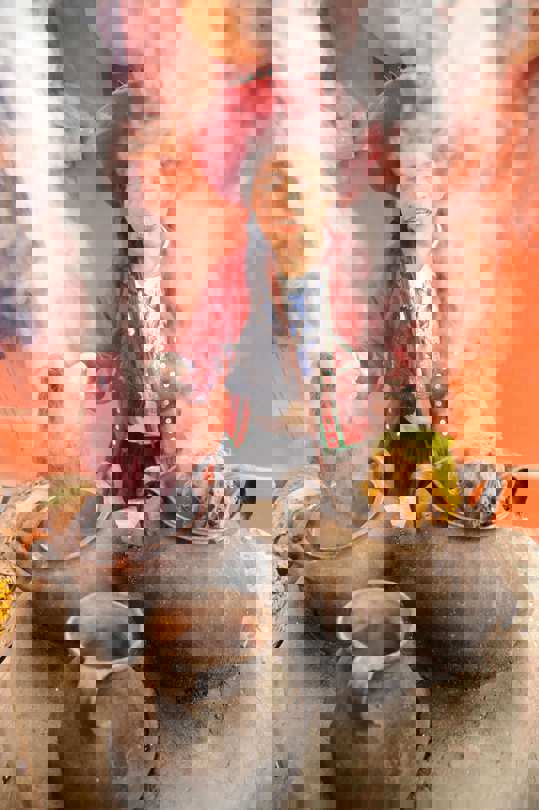
The weaving is still largely organic, with dyes made from herbs, vegetables and some seeds and all done by hand. You can see from the picture below, the natural dyes boiling away in large pots.
As well as weaving, the Peruvians are great knitters and you can purchase jumpers, socks and other warm clothing (perhaps for a trek in the Sacred Valley) from llama or alpaca coats. Woven belts are also very popular.
One of the joys of visiting Peru is visiting a local weaver, understanding their craft and exploring the local market looking for your perfect souvenir. Many of the markets in the larger cities, like Lima and Cusco, can be very touristy and as such the quality and authenticity of the textiles and crafts on show can be doubtful.
We take you to the more remote local markets and exclusive farm visits, where you can meet the skilled crafts people, see them at work on a loom and understand the whole wonderful production process. At the end of your tour you are free to purchase what you like best, as well as my buying local giving something back to these communities. They really value your support and enjoy meeting discerning travellers.
Pisac Market
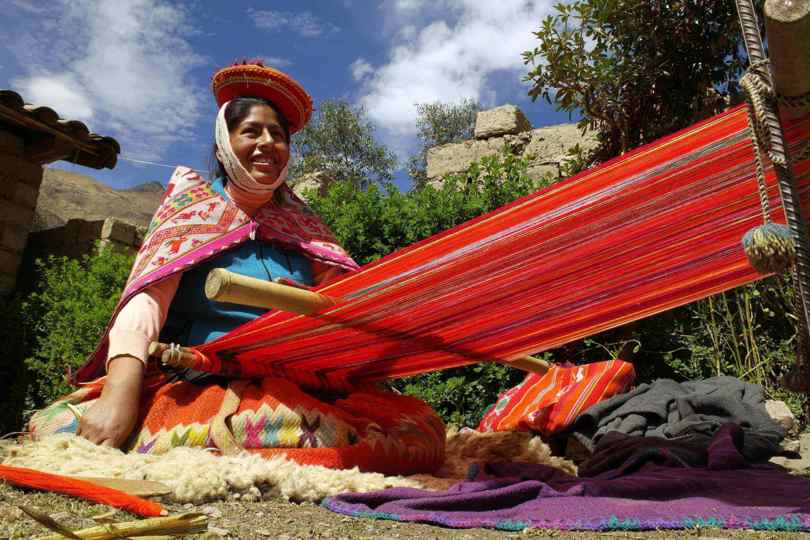
Pisac is a colonial town about 20 miles from Cusco, built on the ruins of an Inca citadel by Viceroy Francisco de Toledo. It stands at the entrance to the immensely fertile Sacred Valley. The ruins are among the most spectacular of the region, flanked by large Inca terraces and overlooking a steep gorge. It has an interesting mix of buildings and its exact purpose is not known for certain, most commonly held to be a large fortress to protect the entrance to the valley.
Pisac is also home to a vibrant and colourful market on Tuesdays. Thursdays and Sundays (this is perhaps the best day as it is the largest market day when locals from miles around come as much to enjoy a social occasion as well as selling their wares). It is a wonderful place to observe buzzing local life, discover some of the local produce, shop for traditional handicrafts and sample local cuisine. Items on show include alpaca jumpers, socks, blankets, shawls, rugs made from the coats of llamas, belts, small bags made of wool and colourful clothes which you can see being worn by the locals at the market.
Willoq
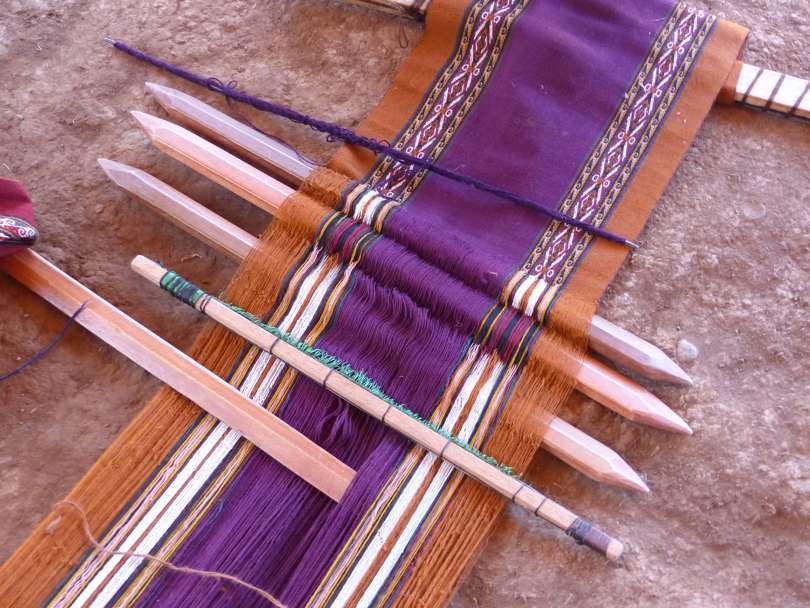
Visiting the village of Willoq in the Andean Mountains is like taking a journey into the past to meet the descendants of the Incas. According to historians, the people of Willoq, with their traditional red ponchos and shawls, are the direct descendants of the last rulers of imperial Cusco, and remain today one of the Andean communities least affected by Western influence. The Willoq community is also well known for its weavers and the quality of its textiles - still a product of patience, knowledge and the skilled weaver. The primitive back strap loom, unaltered for centuries, is still used to weave even the finest textiles.
On your visit, you will be able to observe the expert weavers at their looms and understand the creation of the dyes and the weaving process that is largely unchanged for centuries. Depending on when you visit (our guides will know the best times), you can bargain for some beautiful woven garments or ornamental floor or wall coverings.
Patacancha
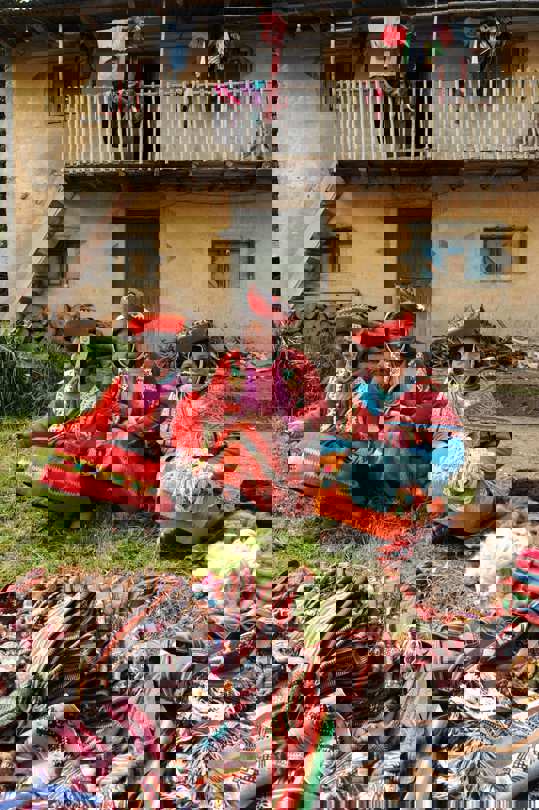
Beyond Willoq, we find Patacancha, a community farm, where you can observe the expert agricultural terraces invented by the Incas to maximise the growing potential of this remote and high altitude region. Their main crop are potatoes, but you can also buy local crafts made by the villages who you can see in the picture above showing their beautiful work for sale.
Chinchero Market
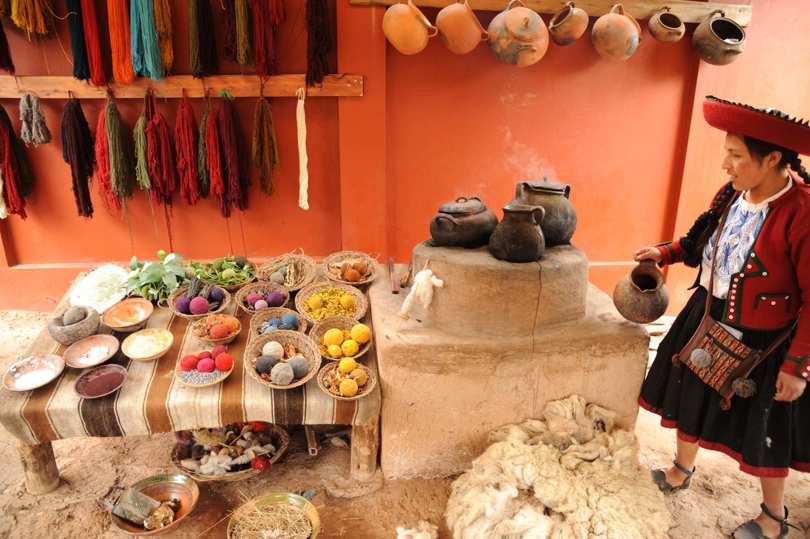
Chinchero is a rural town best known for its textiles and unique community. During a visit here you can meet the women responsible for textile activities, preserving the ancient Inca weaving tradition and knitting techniques. You can also explore the workshop and learn about the processes of obtaining the natural colours and the weaving techniques and will have time to purchase some textiles or handicrafts should you wish.
There local market in Chinchero is very authentic, a colourful and lively affair where indigenous people come from the surrounding communities to trade goods, particularly the woven handicrafts for which the region is so well known. At the highest point in the town there is also an interesting church and to the side of this there are also some Inca ruins.
Lake Titicaca Region
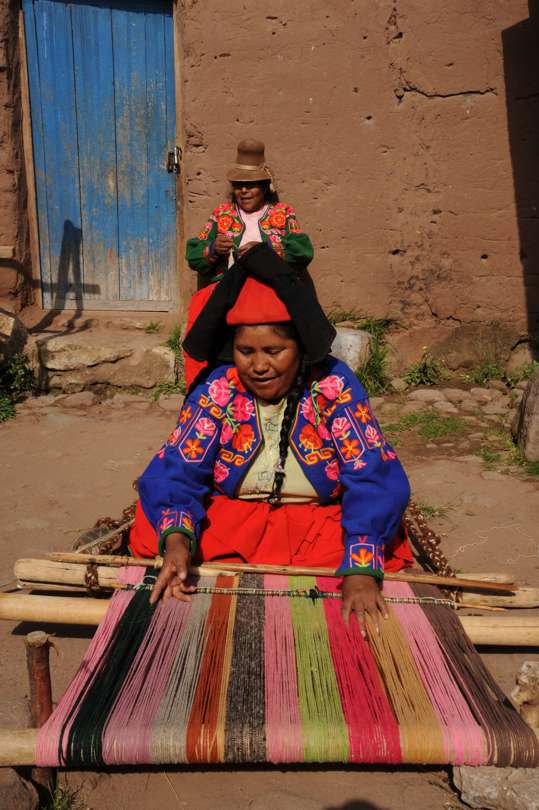
We have connections with a farm outside Puno, where your guide will take you to meet the family (pictured above) who will show you round their workshop. You can buy their hand made goods, including rugs, clothes, bed covers, and other crafts. It is a very special experience. We have known this family for many years and our clients remark to us how enjoyable and fulfilling a visit here is. We are so happy about this, that the ladies above feature on the front cover of our current Latin America brochure.
Taquile Island on Lake Titicaca is known as ‘weavers island’. Here, only the men weave a range of items, the most popular item being woollen hats which you can see worn by most men on the Island. The colours of the hats indicated the marital status of the wearer.
Arequipa Market
The city market in Arequipa (Fundo El Fierro) is less touristy and more authentic than similar markets in Lima or Cusco. Here you can stroll at ease and bargain for your favourite alpaca jumper or scarf, perhaps a hat or a wood carving unique to the south of Peru.
View our portfolio of Private Tour Itineraries to match your interests and preferences. Select your criteria:
View More Tours
peru
14 Nights from £4,894

peru
14 Nights from £4,112

peru
22 Nights from £16,216

peru
6 Nights from £1,596

peru
15 Nights from £3,984

peru
15 Nights from £5,148

peru
15 Nights from £5,870

peru
14 Nights from £3,562

peru
13 Nights from £5,242

peru
14 Nights from £4,034

peru
7 Nights from £2,976

peru
14 Nights from £4,176